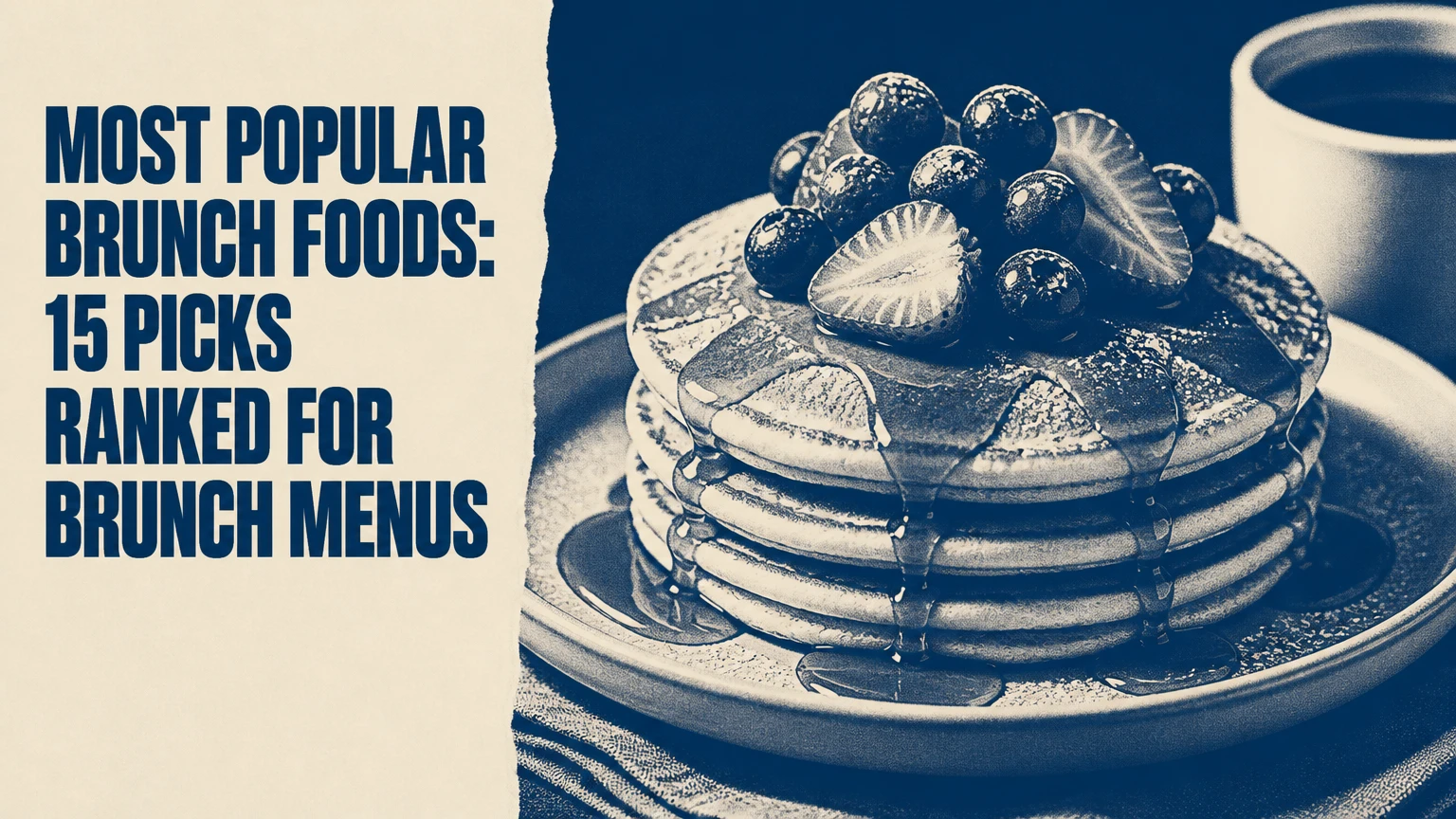
The most popular brunch foods are eggs Benedict, avocado toast, French toast, pancakes, waffles, shakshuka, breakfast hash, omelets, huevos rancheros, and chicken and waffles. These dishes remain popular because they combine familiar ingredients with restaurant-friendly presentation, flexible toppings, and enough richness for a leisurely meal between about 10 a.m. and 2 p.m.
Key Facts at a Glance
- Eggs Benedict is the strongest test of a restaurant’s poaching and emulsion technique.
- French toast works best with day-old brioche or challah cut 1-1.5 inches thick.
- Shakshuka is among the best brunch dishes for sharing because the skillet stays hot at the table.
- A typical homemade brunch plate costs $3-$9 per person, excluding labor and specialty drinks.
- Restaurant brunch commonly costs $15-$35 per person at casual and mid-range venues, before tax, tip, or alcohol.
- Most hot brunch dishes have a 5-15 minute ideal serving window before texture declines.
Which Brunch Foods Are Most Popular?
Eggs Benedict is the leading traditional choice, while avocado toast, pancakes, French toast, waffles, shakshuka, and breakfast hash dominate contemporary menus. Popularity varies by occasion: sweet griddle foods perform best with families, eggs and hashes suit larger appetites, and shareable skillets work better for groups.
Brunch became a recognizable meal category after British writer Guy Beringer proposed the word in an 1895 essay in Hunter’s Weekly. Beringer described brunch as “cheerful, sociable and inciting,” a useful explanation for why brunch menus favor food that encourages conversation, customization, and slow eating.
The most popular foods also share practical traits. Restaurants can prepare their components in advance, finish plates quickly, and offer substitutions without rebuilding the entire menu. Home cooks benefit from the same structure: eggs, toast, potatoes, fruit, and one sauce can create several distinct plates.
Ranked Popularity by Occasion
| Rank | Brunch food | Strongest use case | Typical restaurant price |
|---|---|---|---|
| 1 | Eggs Benedict | Traditional or celebratory brunch | $16-$28 |
| 2 | French toast | Sweet centerpiece | $12-$22 |
| 3 | Avocado toast | Lighter customizable meal | $10-$19 |
| 4 | Pancakes | Family-friendly serving | $10-$20 |
| 5 | Shakshuka | Shared savory skillet | $14-$24 |
| 6 | Waffles | Sweet and crisp contrast | $11-$22 |
| 7 | Breakfast hash | High-satiety meal | $13-$24 |
| 8 | Omelet or frittata | Protein-focused order | $12-$23 |
| 9 | Chicken and waffles | Indulgent sweet-savory plate | $16-$29 |
| 10 | Huevos rancheros | Spiced Mexican-style breakfast | $13-$24 |
1. Eggs Benedict: Best Traditional Brunch Food
Eggs Benedict combines a toasted English muffin, ham or Canadian bacon, poached eggs, and warm Hollandaise sauce. The dish succeeds when the muffin remains crisp, the egg white is fully set, the yolk is liquid, and the sauce is warm without tasting greasy.
The classic version is only one member of a broader family. Eggs Royale uses smoked salmon, Eggs Florentine uses spinach, and California Benedict commonly adds avocado and tomato. These variations alter the salt, fat, acidity, and texture while keeping the same structural format.
A practitioner’s rule is to assemble Eggs Benedict last. Poached eggs can wait briefly in warm water, but toasted muffins become leathery under sauce and Hollandaise separates as it cools or overheats. A restaurant plate often has a five-minute peak.
Choose Eggs Benedict if: you want a traditional, rich, technically demanding brunch plate.
Skip it if: you need a vegan meal, a portable breakfast, or food that can sit for 20 minutes.
2. French Toast: Best Sweet Brunch Food
French toast is thick bread soaked in an egg-and-milk custard, browned in butter, and finished with syrup, fruit, or cream. Brioche and challah produce the richest result, while sourdough adds acidity and a firmer bite.
Use bread that is one day old, cut at least 1 inch thick. A typical custard ratio is 2 large eggs, 120 milliliters of milk, 1 teaspoon of vanilla, and a pinch of salt for four slices. Soak brioche for about 20-30 seconds per side, then cook over medium heat until the center reaches approximately 160°F, or 71°C.
Fresh sandwich bread fails because its soft crumb absorbs liquid faster than its structure can withstand. The result is wet inside and pale outside. Thick, slightly stale bread gives the custard time to flavor the center while the surface develops a firm crust.
Choose French toast if: you want a dessert-like centerpiece with easy toppings.
Skip it if: you need a low-sugar, high-protein meal or must cook everything hours ahead.
3. Avocado Toast: Best Customizable Brunch
Avocado toast pairs mashed avocado with toasted sourdough, whole-grain bread, or another sturdy slice. The base provides creamy fat and mild flavor, while acid, spice, eggs, seeds, vegetables, or fish create contrast.
Restaurant versions commonly cost more than their ingredients because the dish depends on premium bread, ripe avocados, and attractive toppings. At home, one avocado usually covers two moderate slices. Add lemon or lime immediately after mashing to slow browning and improve flavor.
Avocado toast is not automatically a complete meal. A plain slice may provide limited protein, so add a poached egg, cottage cheese, smoked salmon, white beans, or hemp seeds when satiety matters. Pickled onions and radishes contribute acidity and crunch without requiring a second cooking method.
Choose avocado toast if: you want a fast, flexible plate with fresh toppings.
Skip it if: you dislike creamy textures or need food that stays hot for a long service.
4. Pancakes: Best for Families
Pancakes are griddle-cooked cakes made from flour, milk, eggs, a leavening agent, and usually butter or oil. Buttermilk pancakes are tender and lightly tangy, while ricotta, oatmeal, banana, and cornmeal versions change the moisture and density.
Cook pancakes in 4-inch rounds for even portions. A 1/4-cup measure produces a manageable size that cooks in about 2-3 minutes per side. Flip when bubbles appear across the surface and the edges look set, rather than relying on a fixed time.
Pancakes are popular because a single batter accepts many additions, including blueberries, chocolate chips, pecans, citrus zest, and cinnamon. Their weakness is service speed: a full batch loses its crisp edge quickly when stacked and covered. Hold cooked pancakes in a 200°F, or 93°C, oven for no more than 20 minutes.
Choose pancakes if: children or mixed-preference guests need a familiar option.
Skip them if: you want crisp texture after a long buffet service.
5. Waffles: Best for Crisp Texture
Waffles cook batter between patterned plates, creating a crisp exterior and airy interior. Belgian waffles are generally thicker and lighter than American-style waffles, while yeasted Brussels waffles have a particularly open crumb and subtle fermentation flavor.
Waffle irons vary significantly, so use the manufacturer’s fill line rather than a universal batter quantity. A typical 7-inch Belgian waffle uses 2/3-3/4 cup batter and cooks in 4-6 minutes. Do not stack finished waffles because trapped steam softens the crust.
Waffles tolerate savory toppings better than pancakes because their ridges hold sauces and poached eggs. Try fried chicken, smoked salmon, crème fraîche, or sharp cheddar alongside traditional berries and maple syrup. Frozen waffles also reheat well in a toaster, giving them an advantage for advance preparation.
Choose waffles if: crisp edges and topping channels matter.
Skip them if: you lack an iron or need to cook 12 portions simultaneously.
How Do the Main Brunch Foods Compare?
The best brunch dish depends on serving temperature, appetite, preparation capacity, and dietary requirements. Eggs Benedict offers the highest technical payoff, French toast and pancakes provide broad appeal, and shakshuka or hash gives groups a warmer, more forgiving savory option.
| Dish | Prep time at home | Home ingredient cost | Best texture window | Protein profile |
|---|---|---|---|---|
| Eggs Benedict | 35-50 minutes | $4-$9 per person | 5-8 minutes | 20-30 g with ham |
| Avocado toast | 10-15 minutes | $3-$7 per person | 10-15 minutes | 8-25 g with egg |
| French toast | 20-30 minutes | $2-$6 per person | 10 minutes | 12-18 g |
| Pancakes | 25-35 minutes | $1.50-$5 per person | 10-15 minutes | 8-14 g |
| Waffles | 25-40 minutes | $2-$6 per person | 10 minutes | 8-15 g |
| Shakshuka | 30-45 minutes | $3-$8 per person | 15 minutes | 14-24 g |
| Breakfast hash | 35-50 minutes | $3-$9 per person | 15-20 minutes | 18-30 g |
Which Dish Is Best for Your Situation?
| Situation | Best choice | Why it fits | Useful modification |
|---|---|---|---|
| Birthday or anniversary | Eggs Benedict | Restaurant-style presentation | Use smoked salmon or crab |
| Family with children | Pancakes | Familiar flavor and easy toppings | Offer fruit and yogurt |
| Vegetarian group | Shakshuka | Naturally meat-free and shareable | Add feta and chickpeas |
| Post-drinking appetite | Breakfast hash | Potatoes, salt, protein, and eggs | Add beans and hot sauce |
| Quick home meal | Avocado toast | Minimal cooking and assembly | Add two eggs for protein |
| Buffet service | Frittata | Holds better than poached eggs | Cut into wedges before serving |
| Vegan table | Chickpea scramble | Egg-like texture without dairy | Serve with roasted potatoes |
| Gluten-free guest | Shakshuka | No bread is required in the base | Provide gluten-free toast separately |
6. Shakshuka: Best Shareable Savory Dish
Shakshuka consists of eggs gently cooked in a seasoned sauce of tomatoes, peppers, onions, garlic, and spices. The tomato version is associated with North African and Middle Eastern cuisines, while green shakshuka uses spinach, herbs, kale, or other green vegetables.
Build the sauce before adding eggs. Simmer tomatoes for 15-25 minutes until the mixture is thick enough to hold small wells; watery sauce produces loose egg whites and diluted flavor. Add eggs, cover the pan, and cook for 5-8 minutes, depending on whether you want runny or firm yolks.
Serve shakshuka directly from a cast-iron or oven-safe skillet with bread for dipping. Feta, cilantro, parsley, harissa, chickpeas, and preserved lemon provide useful variations. The dish is vegetarian when prepared without meat, but bread, cheese, and eggs determine its final dietary profile.
Choose shakshuka if: guests can share one hot pan and enjoy spiced tomato flavor.
Skip it if: diners need individually plated food or dislike runny yolks.
7. Breakfast Hash: Best for Satiety
Breakfast hash combines crisp potatoes with vegetables, meat or beans, and eggs. Corned beef hash is the diner classic, while Southwestern versions use chorizo, black beans, peppers, onions, avocado, and pepper jack cheese.
The key is moisture control. Boil or steam potatoes until barely tender, cool them, then fry them in a wide pan with enough space for browning. Crowding traps steam and creates soft potatoes. Add already-cooked meat and vegetables after the potatoes develop a crust.
Hash is more forgiving than Eggs Benedict because components can wait several minutes without complete failure. It is also easy to scale, although fried eggs should be cooked separately when serving more than four people. A 6-ounce potato portion per adult is a useful starting point before adding protein and vegetables.
Choose hash if: you want a filling, salty, adaptable meal.
Skip it if: you need a light plate or want delicate, low-fat flavors.
What Other Brunch Foods Belong on a Complete Menu?
Omelets, frittatas, huevos rancheros, chicken and waffles, Turkish eggs, breakfast burritos, and congee extend the menu beyond the familiar American café lineup. A balanced spread usually needs one egg dish, one sweet dish, one vegetable or fruit component, and one starch that can be prepared in advance.
| Dish | Culinary identity | Typical serving format | Make-ahead suitability |
|---|---|---|---|
| Frittata | Italian egg casserole | Wedges, hot or room temperature | High, up to 24 hours |
| Huevos rancheros | Mexican-style eggs | Tortilla with salsa and beans | Medium, components separate |
| Chicken and waffles | American sweet-savory plate | Individual stacked serving | Low, fry chicken near service |
| Turkish eggs | Çılbır, Turkish poached eggs | Yogurt, eggs, chili butter | Low, assemble immediately |
| Breakfast burrito | Portable wrapped meal | Foil-wrapped individual portion | Medium, reheat before serving |
| Congee | East Asian rice porridge | Bowl with toppings | High, base reheats well |
| Dosa with sambar | South Indian fermented crepe | Individual dosa and dipping bowls | Low, dosa loses crispness |
International dishes are not interchangeable substitutes for traditional brunch foods. Turkish eggs need warm garlicky yogurt and chili butter, while congee depends on a soft rice base and savory toppings. Naming the culinary origin accurately improves both menu communication and preparation decisions.
Which Brunch Foods Are Healthier?
Vegetable-forward dishes with eggs, beans, whole grains, or unsweetened dairy generally provide more protein and fiber than syrup-heavy plates. “Healthy brunch” is not a fixed category because portion size, cooking fat, sodium, toppings, and drinks can change the nutritional result substantially.
Avocado toast offers monounsaturated fat and fiber but can become energy-dense when paired with oil, cheese, and large bread. Shakshuka provides vegetables and protein, although packaged tomatoes, feta, and bread may raise sodium. Pancakes and French toast can fit a balanced meal when portions are moderate and fruit replaces some syrup.
For a more filling plate, target 20-30 grams of protein using two eggs plus beans, Greek yogurt, smoked salmon, cottage cheese, or lean meat. Add fruit or vegetables and choose one main starch. The practitioner mistake is reducing fat while leaving a large sugar-and-refined-flour portion unchanged.
What Are the Best Vegetarian, Vegan, and Gluten-Free Options?
Vegetarian brunch can include eggs Benedict with spinach, shakshuka, frittata, mushroom hash, and pancakes. Vegan menus need a replacement for eggs and dairy, while gluten-free menus require separate bread, oats, tortillas, and cooking surfaces to prevent cross-contact.
| Dietary need | Reliable main dish | Replacement | Check before serving |
|---|---|---|---|
| Vegetarian | Shakshuka | Eggs remain central | Use vegetarian cheese |
| Vegan | Chickpea scramble | Nutritional yeast or tofu | Check bread and sauces |
| Gluten-free | Potato hash | Gluten-free toast or corn tortilla | Avoid shared toaster surfaces |
| Dairy-free | Avocado toast | Olive oil instead of butter | Confirm bread and Hollandaise |
| Lower-sodium | Vegetable frittata | Herbs, lemon, unsalted beans | Limit ham, feta, and sauces |
| Higher-protein | Eggs with beans | Greek yogurt or fish if suitable | Measure the actual serving |
Hollandaise is usually unsuitable for vegan diners because it contains egg yolks and butter. Vegan alternatives made from aquafaba, plant butter, or blended cashews can work, but they do not have the same flavor or heat tolerance. State substitutions clearly rather than assuming guests will infer them.
How Do You Poach Eggs for Brunch?
Poach eggs in water held at a bare simmer, approximately 180-190°F, or 82-88°C, for 3-4 minutes. Fresh eggs, a fine-mesh strainer, and gentle water movement produce tighter whites, while a rolling boil creates ragged edges and toughens the egg.
- Crack each egg into a small bowl, then pour it through a fine-mesh sieve for a few seconds to remove loose white.
- Heat a deep pot of water to a bare simmer. Add about 1 tablespoon of white vinegar per liter if the whites need extra support.
- Slide the egg into the water without dropping it from height. A gentle whirlpool helps a single egg, but avoid violent swirling.
- Cook for 3-3.5 minutes for a set white and liquid yolk. Add 30-60 seconds for a firmer center.
- Lift with a slotted spoon and drain on a towel. Serve immediately or chill in an ice bath for short-term holding.
Eggs can be poached several hours ahead for a large gathering, then reheated in hot, nonboiling water for 30-60 seconds. Do not hold cooked eggs indefinitely at room temperature. Food safety depends on time, temperature, and the diner’s risk profile, especially for pregnant, elderly, or immunocompromised guests.
How Do You Keep Hollandaise Smooth?
Hollandaise stays smooth when egg yolks are warmed gently, melted butter is added gradually, and the finished sauce remains below a hard simmer. For a four-serving batch, whisk 3 yolks with 1 tablespoon lemon juice and slowly incorporate about 115 grams of warm melted butter.
- Whisk yolks, lemon juice, and salt in a heatproof bowl.
- Set the bowl over barely simmering water without letting the bowl touch the water.
- Whisk until the yolks thicken, then drizzle butter in a thin stream while whisking continuously.
- Add warm water by the teaspoon if the sauce becomes too thick.
- Season with cayenne, additional lemon juice, and salt immediately before serving.
A broken sauce usually means the butter entered too quickly or the yolks overheated. Rescue it by whisking a fresh yolk with 1 teaspoon warm water in a clean bowl, then gradually adding the broken sauce. The new yolk provides another emulsion structure.
What Brunch Mistakes Cause the Worst Results?
The most damaging brunch mistakes involve moisture, temperature, and sequence. Cooks often prepare delicate components too early, crowd potatoes in the pan, soak fresh bread too long, or let Hollandaise sit over direct heat.
- Soggy French toast: Use stale bread, shorten the soak, and cook over medium heat until the surface browns.
- Rubbery poached eggs: Lower the water below a boil and remove eggs at 3-4 minutes.
- Broken Hollandaise: Reduce heat and add butter more slowly; rescue with a fresh yolk.
- Soft breakfast potatoes: Dry cooked potatoes before frying and use a wide pan.
- Cold plates: Warm plates in a low oven and assemble eggs, sauce, and toast last.
- Watery shakshuka: Reduce the tomato base before adding eggs, then uncover briefly if condensation collects.
The most counterintuitive rule is that the oven is often better than the stovetop for holding brunch components. Pancakes, waffles, and roasted potatoes tolerate a short 200°F hold, while eggs and emulsified sauces deteriorate rapidly under the same treatment.
How Much Time and Money Does Brunch Require?
A homemade brunch for four typically takes 35-60 minutes and costs $12-$36 for the main food, depending on eggs, smoked fish, specialty bread, meat, and produce. Restaurant brunch commonly takes 1.5-3 hours socially, while food preparation after ordering often requires 15-45 minutes during peak weekend service.
| Brunch setting | Typical cost per person | Preparation or wait time | Typical duration |
|---|---|---|---|
| Homemade basic menu | $3-$7 | 30-45 minutes | 45-90 minutes |
| Homemade premium menu | $7-$15 | 45-75 minutes | 60-120 minutes |
| Casual diner | $10-$18 | 15-30 minutes | 60-90 minutes |
| Mid-range bistro | $20-$40 | 20-45 minutes | 90-150 minutes |
| Hotel or bottomless brunch | $50-$110+ | 20-45 minutes | 2-3 hours |
Prices vary by country, city, alcohol policy, and venue. The figures above are typical planning ranges rather than universal rates. In Bangladesh, for example, menus may be quoted in taka and hotel brunch pricing can differ substantially from United States restaurant pricing.
How Should You Plan Brunch for a Group?
A group brunch works best when one dish can be shared, one sweet item can be batch-cooked, and at least one component can be prepared the day before. For eight guests, plan 12 eggs if eggs are the main protein, 4-5 pounds of potatoes for hash, 16 slices of bread for toast-based dishes, and 8-12 ounces of fruit per person.
Prepare the following in advance:
- Chop onions, peppers, herbs, and potatoes the day before.
- Bake a frittata or prepare shakshuka sauce up to 24 hours ahead.
- Mix pancake batter shortly before cooking, since leavening weakens over time.
- Set out toppings in labeled bowls so guests can customize plates.
- Cook two foods in parallel, but reserve eggs, toast, waffles, and sauces for final assembly.
Do not offer five dishes that all require individual stovetop attention. A better menu combines baked frittata, fruit, roasted potatoes, one skillet sauce, and either pancakes or toast. That arrangement reduces bottlenecks and keeps dietary substitutions visible.
What Should You Order at a Restaurant?
Order Eggs Benedict when evaluating a classic brunch kitchen, shakshuka when sharing, hash when hunger and speed matter, avocado toast when customization matters, and pancakes or French toast when sweetness is the priority. Ask about portion size, side dishes, sauce ingredients, and whether eggs can be cooked to order.
Restaurant menus often use “brunch” to describe dishes with very different service characteristics. Benedict should arrive immediately after assembly, whereas frittata can tolerate a short wait. Fried chicken and waffles may take longer because the chicken requires a separate fry station, especially during the Saturday and Sunday peak from 11 a.m. to 1:30 p.m.
A useful ordering question is whether the kitchen makes Hollandaise, bread, or hash fresh. Those details reveal more than a menu adjective such as “artisan.” If a dish includes several toppings, request sauces on the side when crispness matters.
Frequently Asked Questions
What is the most popular sweet brunch food?
French toast is often the strongest sweet brunch choice because it combines crisp edges, custardy centers, and familiar toppings. Pancakes suit larger family groups, while waffles offer better crunch and sauce retention. Choose French toast for a rich plated dish, pancakes for easy batch cooking, and waffles when texture matters most.
What is the best brunch food after drinking?
Breakfast hash is the most practical post-drinking choice because potatoes, eggs, beans, and meat provide substantial carbohydrates, protein, and sodium. Shakshuka with bread is a lighter alternative with more vegetables. Water and a nonalcoholic drink matter more than any single menu item for recovery.
Can brunch foods be prepared the night before?
Frittata, shakshuka sauce, roasted potatoes, fruit, and pancake toppings can be prepared the night before. Poached eggs, Hollandaise, toast, waffles, and fried foods are better finished close to serving because their textures decline quickly. Separate wet and crisp components during refrigeration and reheating.
How many dishes should a brunch menu include?
A home brunch menu usually needs four core elements: one main savory dish, one sweet dish, fruit or vegetables, and a drink. For eight guests, add a second protein or a dietary alternative. More than six labor-intensive dishes often creates cold food and delayed service.
Are eggs Benedict and Eggs Royale the same dish?
Eggs Royale follows the Eggs Benedict structure but replaces ham or Canadian bacon with smoked salmon. Both use toasted bread, poached eggs, and Hollandaise. Eggs Florentine replaces meat with spinach, while California versions commonly add avocado and tomato, although restaurant definitions vary.
What can replace Hollandaise sauce?
Yogurt-herb sauce, lemon tahini, avocado crema, tomato relish, and mustard cream can replace Hollandaise. Choose an acidic sauce for rich eggs and bread, then adjust salt because smoked salmon, ham, feta, and hot sauce already contribute substantial sodium.
The Bottom Line
The most popular brunch foods succeed because they balance comfort, customization, and manageable service. Choose Eggs Benedict for a classic celebration, French toast or pancakes for sweet appeal, shakshuka for sharing, avocado toast for flexibility, and hash for maximum satiety. The best brunch menu also protects texture by cooking delicate components last, offering clear dietary alternatives, and matching each dish to the occasion.