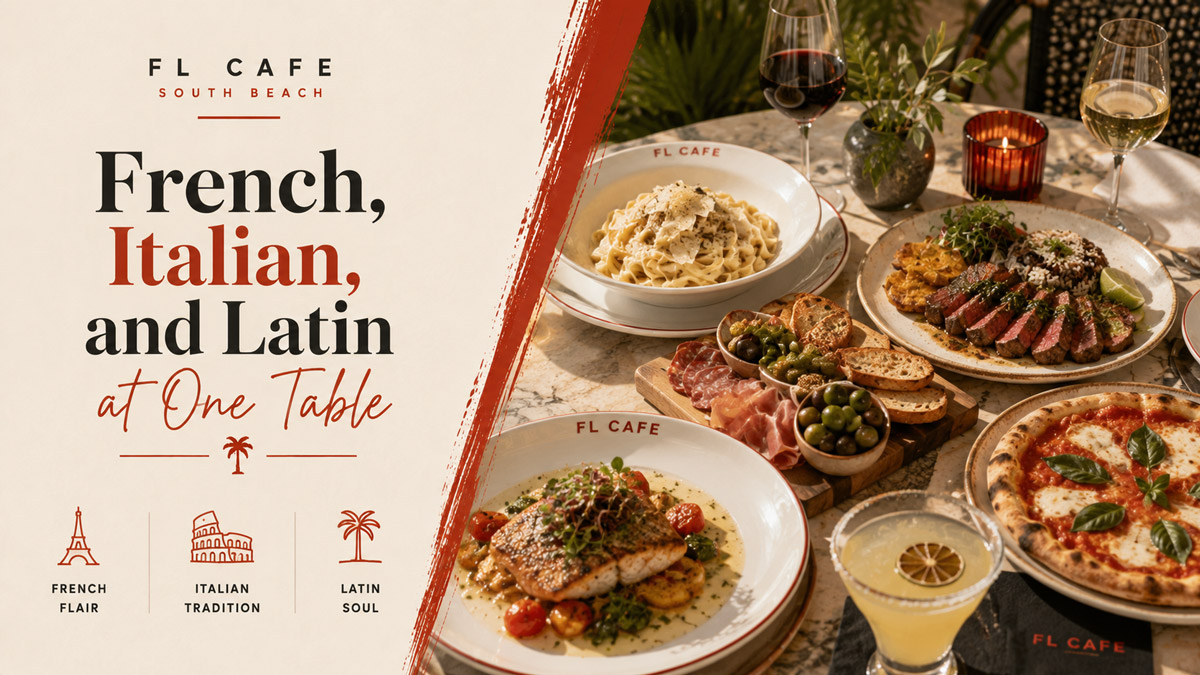
Few menus sit comfortably across three cooking traditions, but FL Cafe builds its identity around exactly that.
The owner’s own description names American, French, Italian, and Latin dishes, and this guide walks through how those styles share one table.
The American Base
The verified listing classifies FL Cafe as an American restaurant, which is the natural anchor.
American-style breakfast and familiar lunch plates give the menu a grounding most guests recognize immediately.
Everything else on the menu is built on that comfortable, recognizable base.
The French Corner
The same listing names French restaurant and brasserie as categories.
That points to a polished, food-first style of cooking, the kind of plates you expect from a brasserie: well-handled ingredients, an approachable room, and a menu that rewards a lingering meal.
The French side is an accent, not the whole story.
The Italian and Mediterranean Side
The owner description names Italian cooking, which brings a warm, ingredient-driven streak to the menu.
Pasta and Mediterranean flavors fit comfortably beside the American base, giving a table a second direction when a guest is not in an American mood.
Bright ingredients and familiar comfort food describe this corner well.
The Latin Flavor
South Florida is one of the great homes of Latin cooking, and the owner description names Latin-style dishes as part of the range.
That makes the Latin corner feel local rather than exotic: bold, confident flavors that reflect where the restaurant actually sits.
For a visitor, it is a way to taste the region.
Why the Mix Works
A multi-cuisine menu works when each style has a real voice and the kitchen handles them all with fresh ingredients, which is exactly the picture the owner paints.
A group with different tastes can each order from the corner they want, which makes the cafe a strong choice for group meals and gatherings on the Avenue.
The Honest Limit
FL Cafe does not publish a full menu, so this guide stays at the level of what is verified: the categories and the owner’s description.
It does not name a specific dish, price, or availability.
When a detail matters, the kitchen is the source of truth, and a phone call gets you the current version.
What to Ask
- Which style is the kitchen serving today?
- Is a specific French or Italian dish available?
- What does the kitchen suggest for a first visit?
- Can we mix styles in one order?
Noticing the Difference
The next time you sit at the table, notice how the menu’s accents shift the room.
An American breakfast morning feels different from a French-inspired dinner or a Latin-leaning plate, all within the same cafe on Collins Avenue.
That range is the point.
How to Order Across Styles
The practical question with a multi-style menu is how to order without guessing.
The reliable habit is to name your mood, not your dish: tell the kitchen whether you want the American side, a French-inspired plate, an Italian or Mediterranean dish, or a Latin flavor, and let them point you to a current option.
That keeps the order honest because the menu is not published.
Named moods give the kitchen everything they need to match you to the day’s offering, and first-timers end up with a better meal than they would from guessing a specific dish that might not be on the board.
Why the Mix Is Worth Trying
A menu that moves across American, French, Italian, and Latin cooking is worth trying precisely because it widens what a single meal can be.
Instead of committing to one tradition, a table can sample two or three on one visit, from a recognizable American plate to a French accent to a Latin finish.
That range is rare on an Avenue where many spots commit to a single style, and it is the clearest reason to put FL Cafe on a short South Beach list.